Goggled top hats, pocket watches, and airships — the visual vocabulary of a world run on steam.

Steampunk is recognized first through its objects. Every accessory tells a story of imagined engineering — as if a 19th-century clockmaker and aeronaut had glimpsed our future, without ever giving up copper, brass, and visible gears. Here are a few defining pieces of that visual vocabulary.
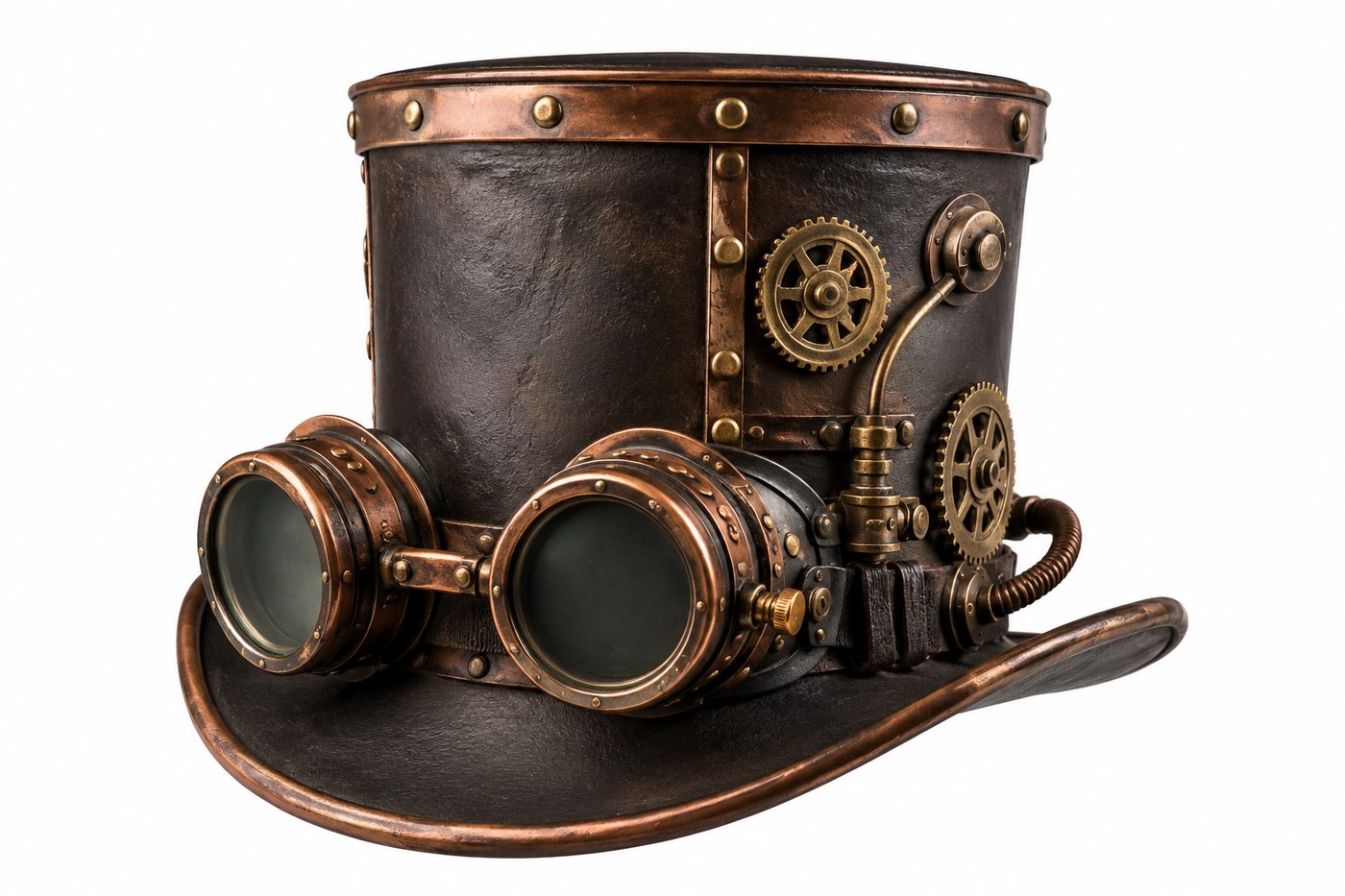
The top hat, a symbol of Victorian elegance, is reinvented here with riveted copper goggles — originally aviator or mechanic's eyewear, worn flipped up on the hat between expeditions. Arguably the most recognizable accessory of the genre.
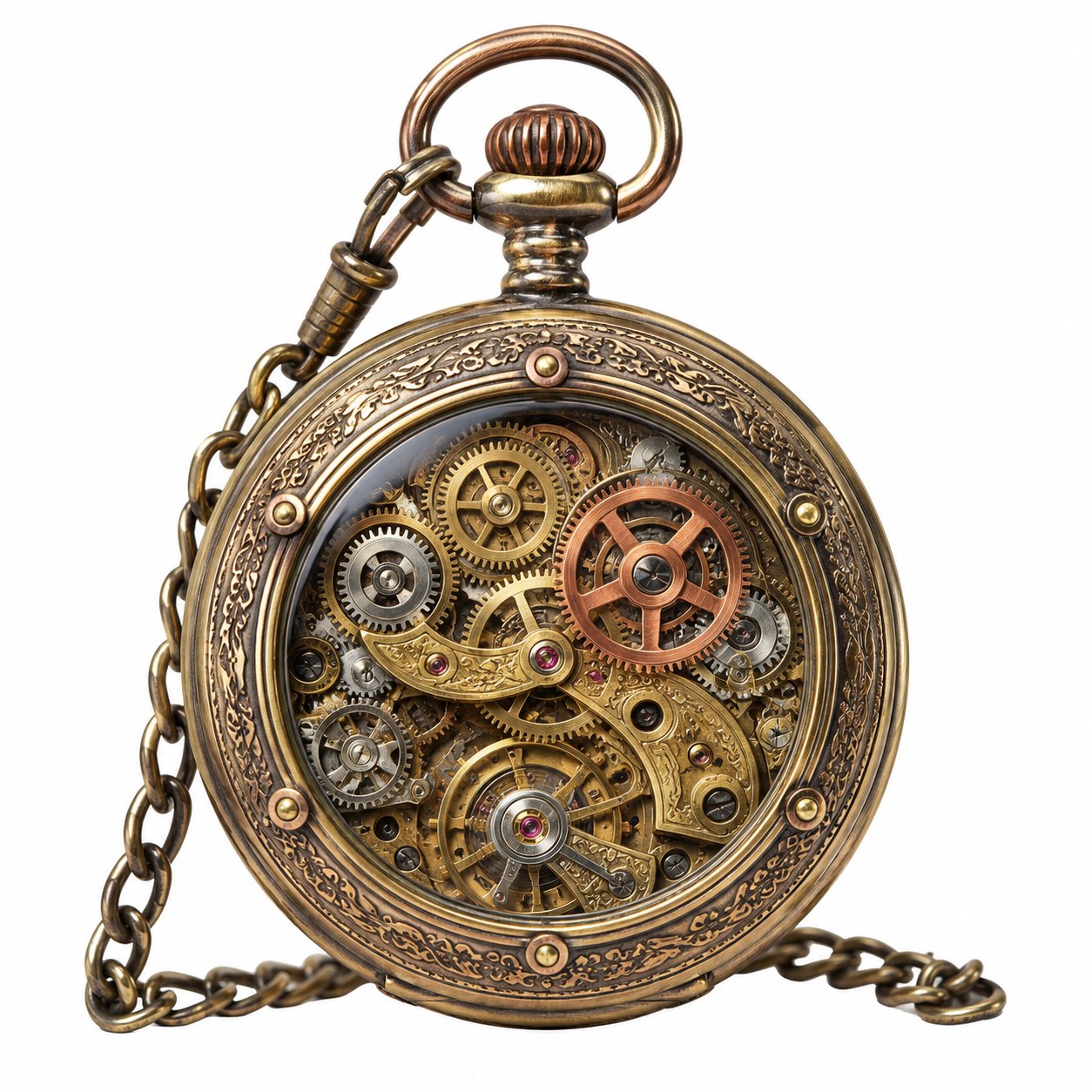
No other object sums up the steampunk spirit better: a fully visible mechanism, every gear in its place, nothing hidden. The pocket watch embodies the idea of a technology that's understandable, almost intimate.
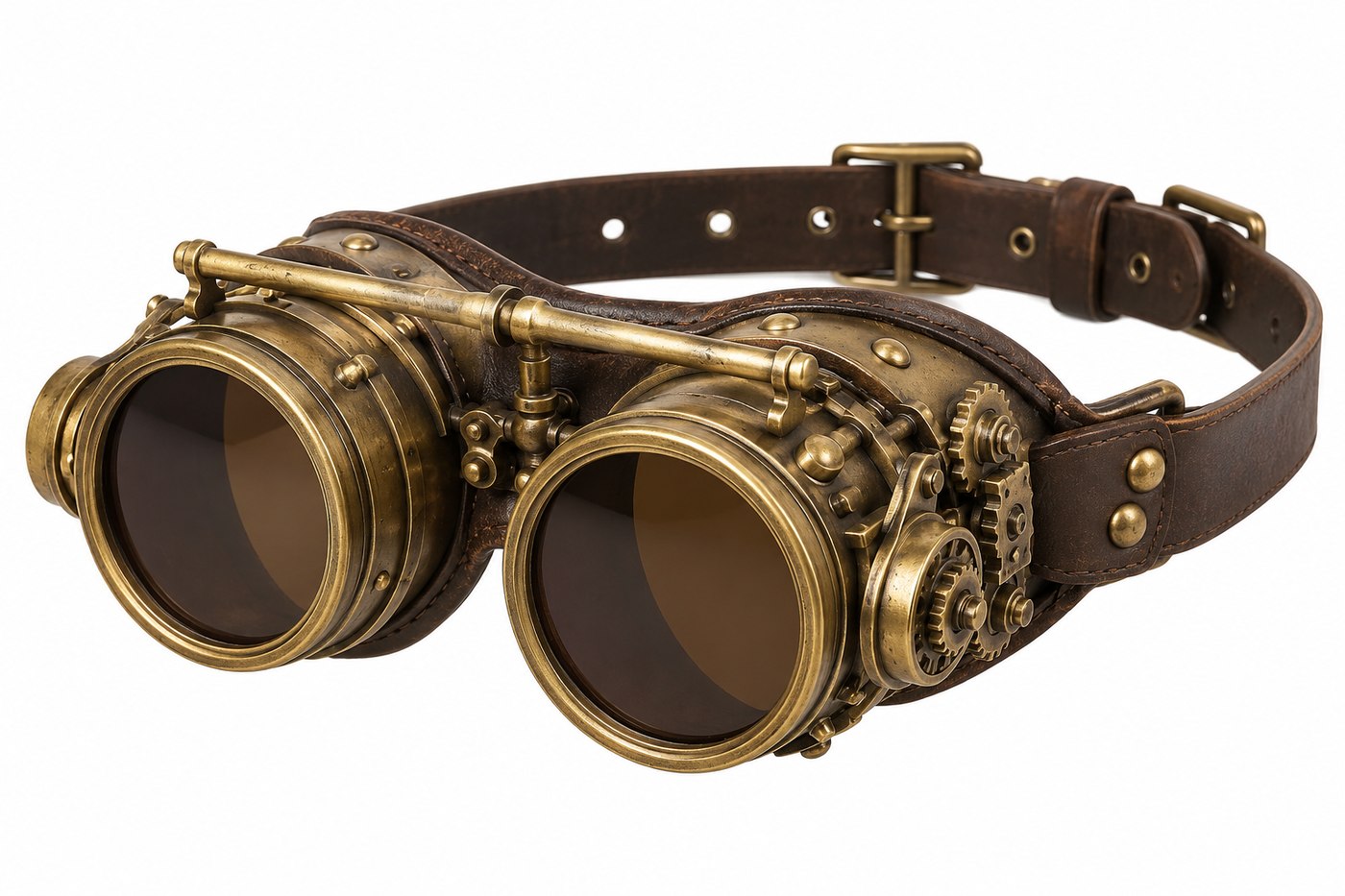
Essential for facing the steam, smoke, and sparks of the machines. Copper frames, tinted lenses, leather straps: goggles are the steampunk equivalent of sunglasses — as practical as they are stylish.
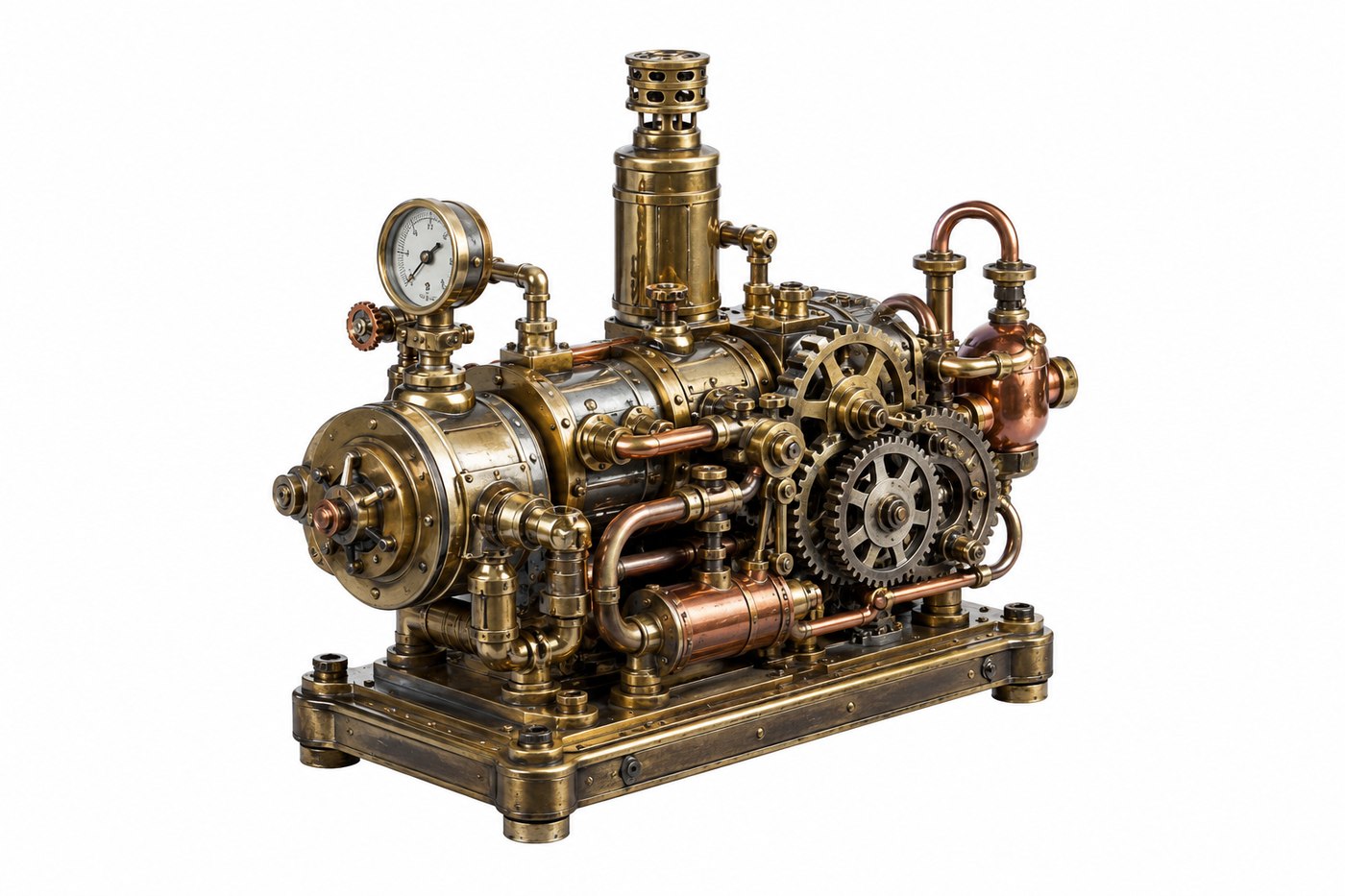
Copper pipes, valves, a pressure gauge: the miniature engine is the beating heart of every steampunk mechanism, whether it drives a giant clock or a companion automaton.
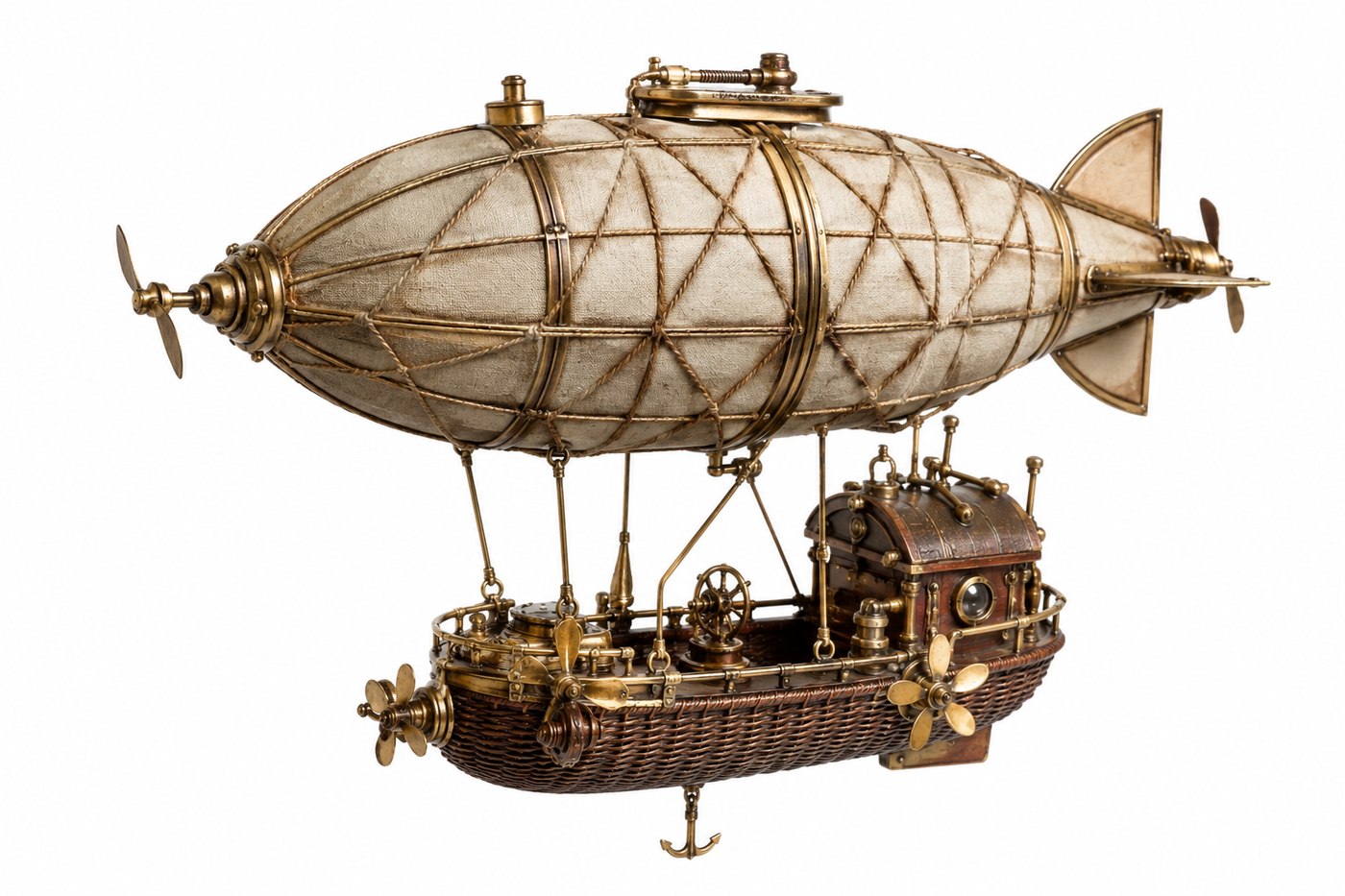
The steampunk sky belongs to airships, never airplanes. Wicker gondola, weathered wood frame, brass fittings: these are the vessels that carry travelers and cargo between the clock towers of mechanical cities.
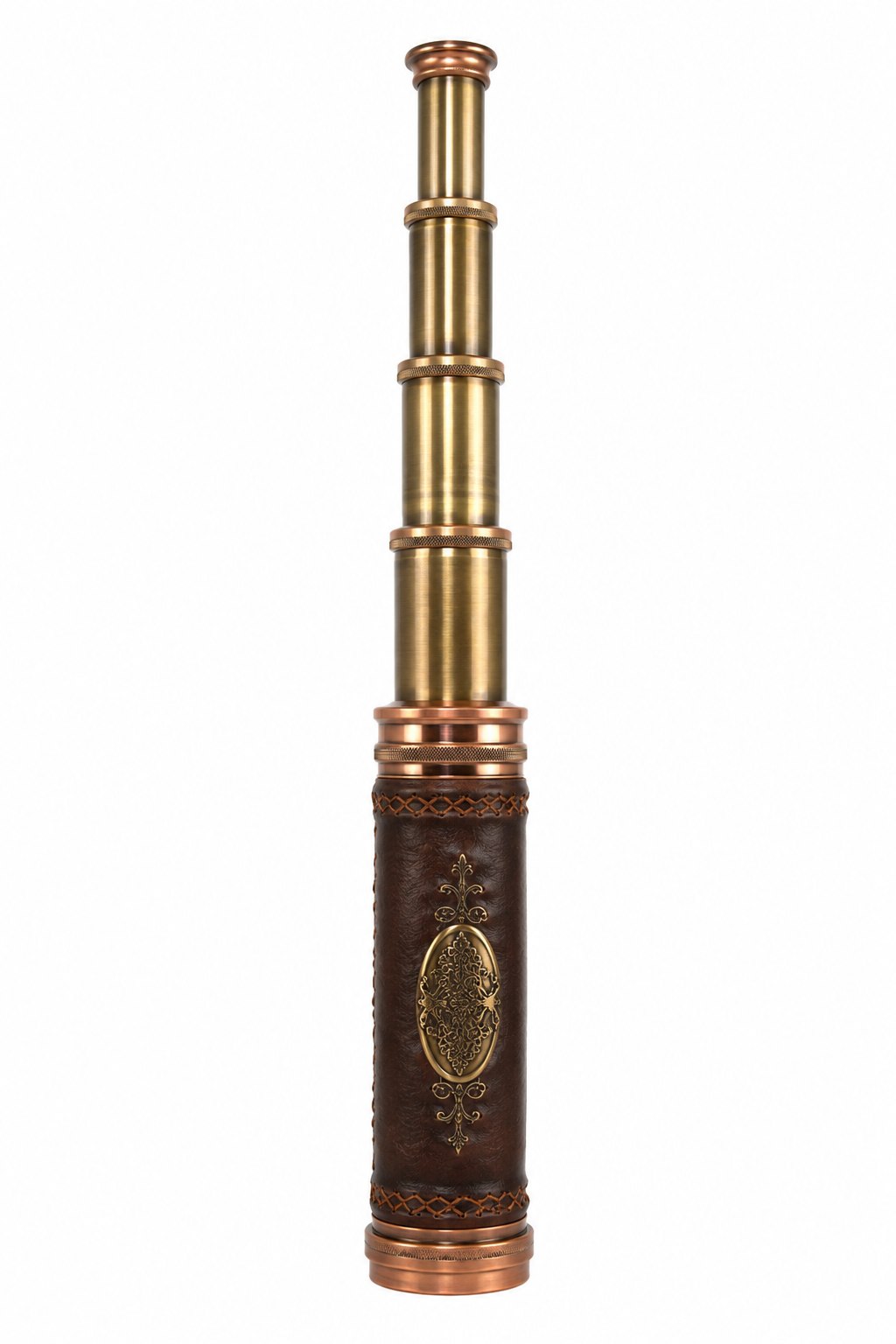
An explorer's and captain's instrument, the polished brass spyglass completes this arsenal — for spotting, in the distance, the next city of gears or an airship's home port.

What makes steampunk so recognizable is the coherence of this world: every object, from the smallest accessory to the grandest train station, follows the same rules — weathered copper, exposed mechanisms, Belle Époque elegance. That is exactly the coherence I strive to preserve in every piece at La Galerie Mécanique.
— Aurélien Duvernay